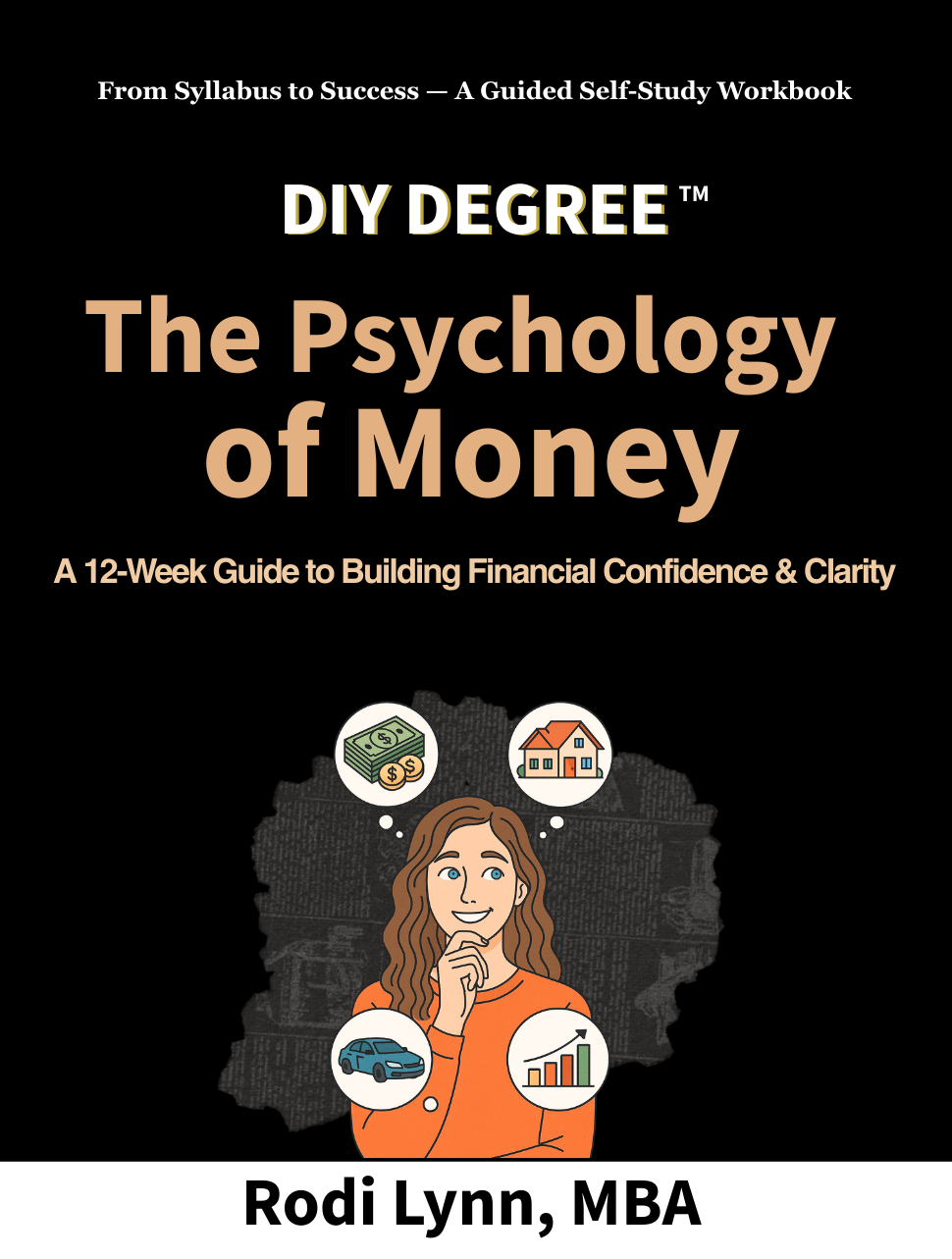
The Psychology of Money
A 12-Week Guide to Building Financial Confidence & Clarity
12 weeks · Rodi Lynn, MBA · MVRO Publishing
By Week 12, You Will Understand
Your money mindset and emotional triggers, the time value of money, the basics of saving, spending, and risk, how interest, debt, and credit work, the basics of investing and retirement accounts, how taxes and insurance fit into your financial picture, and a simple, flexible system that supports your goals.
Sample Week 1
What's Your Money Mindset?
By the end of this week, you should be able to
- Identify your core beliefs about money and where they come from
- Recognize how emotions influence financial decisions
- Build awareness of your current financial habits and attitudes
Questions to Ask
- — What messages did I hear about money growing up?
- — When do I feel most stressed or relaxed about money?
- — How do I define financial "success" for myself?
Suggested Internet Searches
- money mindset types
- financial psychology exercises
- how childhood affects money habits
AI Prompts
Beginner — What are some common money mindsets, and how do they affect financial behavior?
Pro-Level — As a financial coach, help me identify and describe the dominant money mindset I have based on the following reflections: [insert your answers to the questions above]. Provide suggestions for how I can shift or strengthen my mindset to align with long-term financial confidence.
Case Study
Maya, age 28, received a small inheritance. She feels guilty spending any of it and worries she'll make a mistake. She's been hoarding the money in a checking account for over a year, avoiding decisions.
- — What money mindset might Maya be operating from?
- — What are the potential risks of her current behavior?
- — What small, low-risk step could she take to feel more empowered?